From a needs analysis to new bioeconomy skills: a new result of the BioBusiness Catalyst project
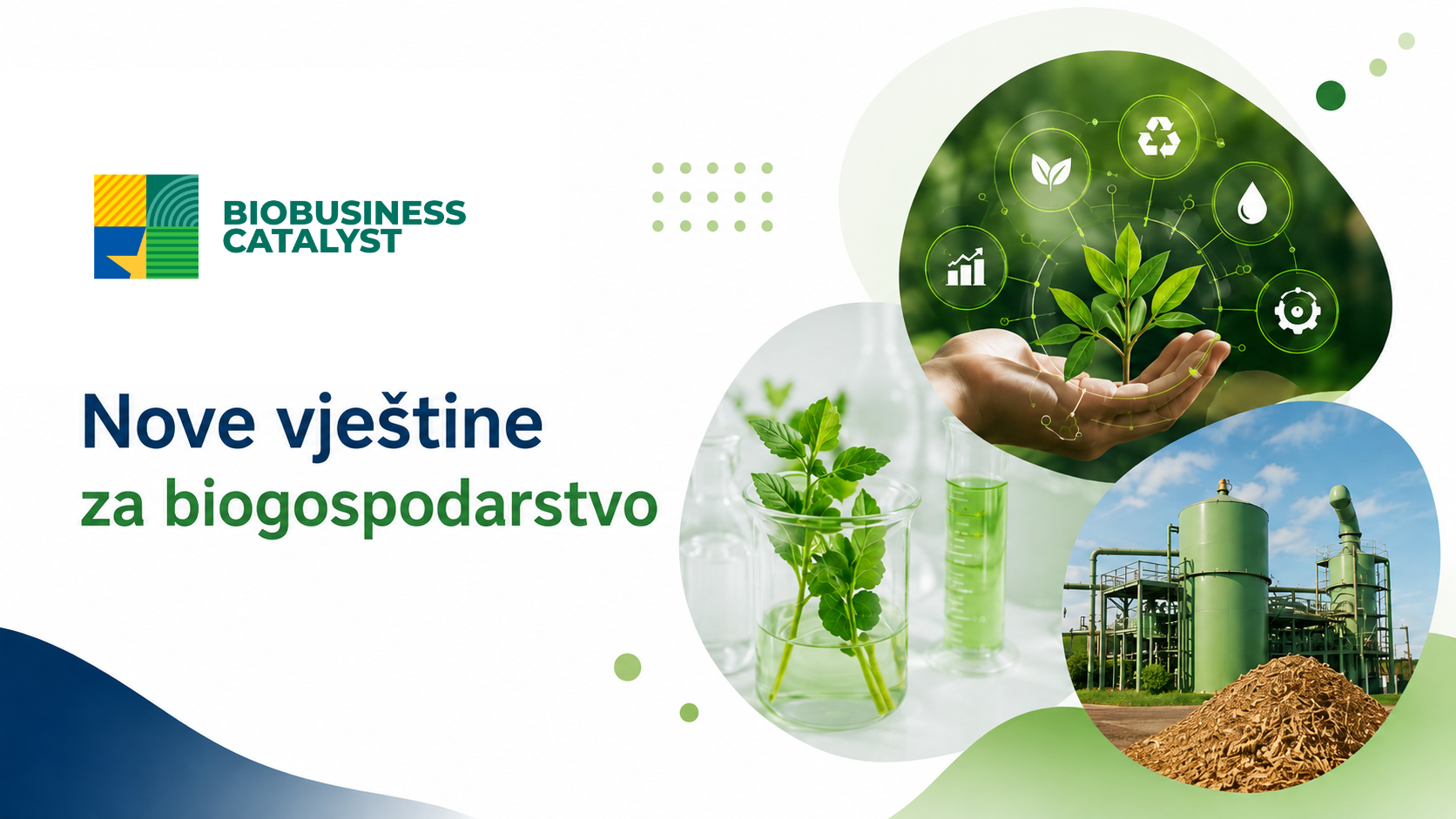
Within the BioBusiness Catalyst project, a new report has been completed: D2.4 – Report on the assessment of skills and training needs in the bioeconomy, an important step towards a new vocational curriculum matched to what the labour market actually needs.
Pannonia Consulting, the Croatian partner on the project, takes part in an international partnership linking organisations from Finland, Croatia, Ghana, Botswana, Ethiopia and Tanzania. The shared goal is to strengthen the capacity of vocational education and training and to develop the knowledge and skills the growing field of the bioeconomy calls for.
The new report brings together earlier analyses of policy, market trends, the legislative framework, labour market needs and the vocational education already on offer. Its purpose is not only to identify gaps in existing knowledge and skills, but to turn them into concrete guidance for developing the future curriculum.
Which skills are missing?
The analysis shows that every partner country already has relevant educational programmes in agriculture, forestry, environmental protection, renewable energy, waste management, the circular economy and entrepreneurship. Those programmes, however, often stay focused on traditional sector competences and do not keep up well enough with what the bioeconomy now needs.
The needs recognised most clearly concern competences tied to processing and valorising biomass, developing bio-based products, digital monitoring and traceability, managing production processes, quality and safety, regulatory requirements, and practical entrepreneurship.
An important conclusion of the report is that future bioeconomy specialists do not only need to know the principles of sustainability. They need concrete competences they can apply in a real working environment: from identifying local sources of biomass and the scope for using waste as a resource, through documenting and monitoring processes, to developing simple prototypes of new products and judging their market potential.
From research to an actual curriculum
The findings of D2.4 are the direct basis for the next phase of the project, in which a modular curriculum for the Bio-Based Product Technician will be developed.
The curriculum will connect technical, digital, entrepreneurial, regulatory and sustainability competences, with a strong emphasis on practical and work-based learning. The aim is that learners finish not only with theory, but with competences they can clearly demonstrate and use with a future employer, in their own venture, or in further education.
Much of the project’s value comes from European and African partners working together. Finland and Croatia operate in a more developed European regulatory and innovation environment for the bioeconomy, while the partner countries of sub-Saharan Africa hold great potential in agricultural biomass, renewable energy, waste processing and local green entrepreneurship. The future curriculum will therefore have a shared core of competences while allowing adaptation to local resources, markets and needs.
For Croatia the openings are particularly in agriculture, forestry, the wood and food industries, the use of their by-products, and the green transition.
Through BioBusiness Catalyst we want to help vocational education keep pace with changes already under way in the economy. The green transition will not depend on new technology and policy alone, but on people with the concrete knowledge and skills to put them into practice.
D2.4 is thus an important bridge between the research done in the project and the practical educational solutions that follow in the next phase of BioBusiness Catalyst.
The final version of the study will be published shortly.