Pannonia Conducts International Research on Peace Education in Five European Countries
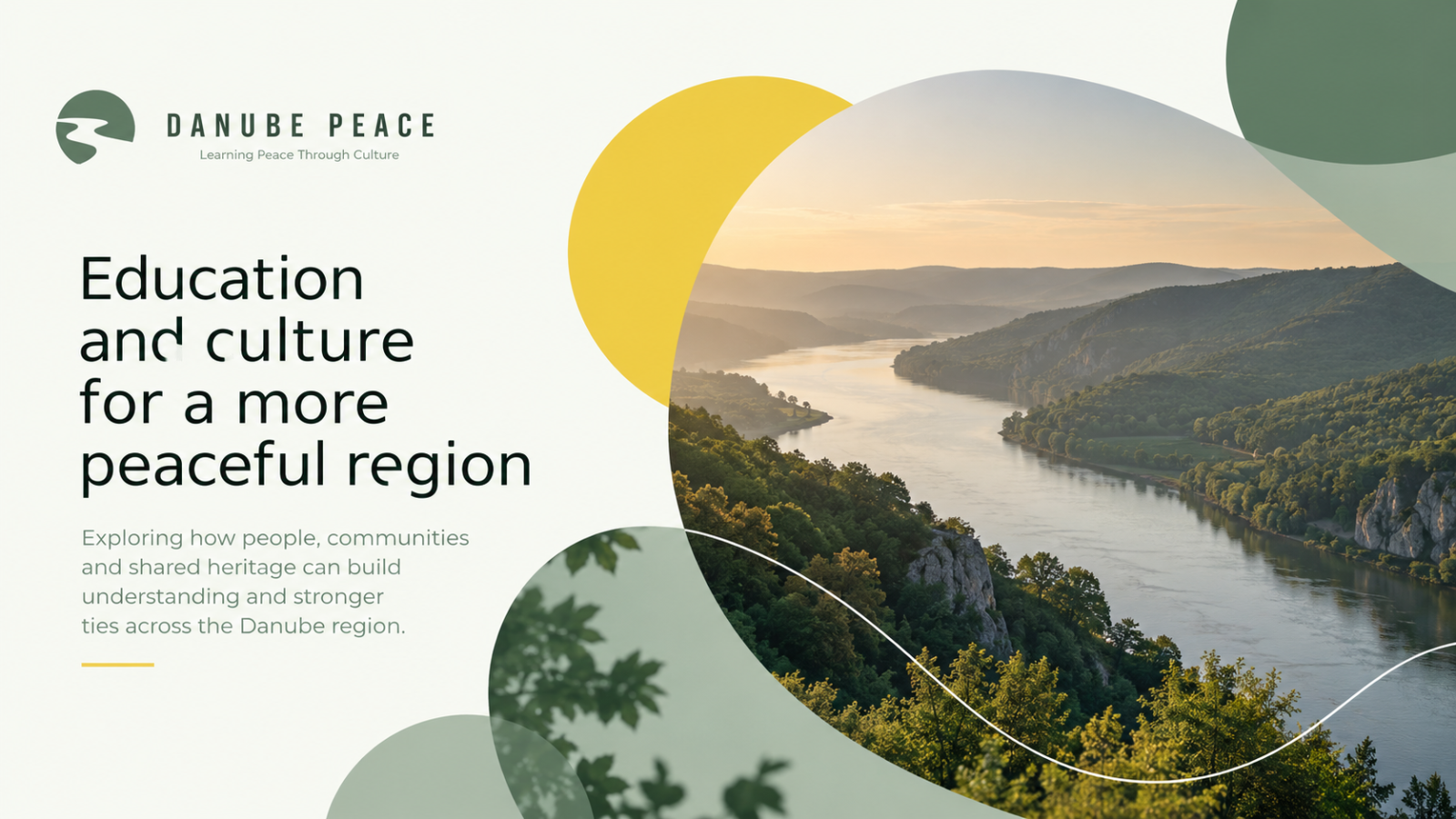
How can education, culture and dialogue contribute to building more peaceful and connected communities? This question was at the heart of an international study conducted within the Erasmus+ project DANUBE PEACE, in which Pannonia coordinated research activities and the development of a comprehensive report on the current state and needs of peace education in five European countries.
The research was carried out in Croatia, Germany, the Czech Republic, Ukraine, and Bosnia and Herzegovina, bringing together the perspectives of educators, civil society organisations, experts and other stakeholders involved in adult education, cultural activities and community development.
The aim was to better understand how peace education is currently implemented, what challenges organisations and educators face, and how cultural heritage, the arts and local initiatives can be used more effectively to encourage dialogue and mutual understanding.
Over 90% of Respondents Recognise the Importance of Peace Education
The research included five national surveys involving 150 respondents, five focus groups with a total of 39 participants, and seven expert interviews. In addition, 16 examples of good practice were analysed, and 28 educational and other resources related to peace education were identified.
The findings reveal that more than 90% of respondents consider peace education important or very important. However, a significant gap remains between recognising its importance and having the resources and opportunities needed to put it into practice.
Organisations working in adult education, cultural activities and community development often lack sufficient funding, practical educational materials and institutional support. Many valuable initiatives are implemented through short-term projects, making it difficult to ensure their continuity once project funding ends.
The research also found that communities in all five countries face similar challenges despite their different historical and social backgrounds. Social polarisation, discrimination, declining trust and a lack of opportunities for open dialogue were identified as barriers affecting community relationships and social cohesion.
Participants particularly emphasised the need for educational approaches that go beyond theoretical discussions about peace. Instead, they highlighted the importance of practical activities that help people develop communication skills, empathy, conflict-resolution abilities and an understanding of different perspectives.
What Did the Research Reveal About Croatia?
A total of 33 respondents participated in the Croatian national survey, highlighting several important challenges affecting their communities.
Among them, 25 respondents identified social exclusion as a significant issue, while 22 pointed to a lack of dialogue. Discrimination was mentioned by 14 respondents as another challenge affecting community life.
These findings demonstrate the importance of creating opportunities that bring different social groups together, encourage mutual understanding and provide safe spaces for discussing issues that are often overlooked.
The research also highlighted inequalities in access to educational and community activities. While larger cities, particularly Zagreb, benefit from more developed networks of civil society organisations and initiatives, people living in smaller towns and rural areas often have fewer opportunities to participate in programmes promoting dialogue, social inclusion and active citizenship.
At the same time, Croatia has valuable experience in peacebuilding and community development. Civil society organisations, intercultural initiatives and long-standing community programmes in areas affected by past conflicts provide important examples of how dialogue and cooperation can be strengthened at the local level.
These experiences offer a valuable foundation for developing educational programmes that can be adapted and implemented in other communities.
Culture and Personal Stories as Tools for Connecting People
One of the most interesting findings of the research concerns the role of culture in peacebuilding.
Peace education does not have to take place exclusively through lectures, workshops or formal educational programmes. It can also be encouraged through cultural heritage, personal storytelling, artistic activities, intergenerational encounters and the shared exploration of local history.
Such approaches allow people from different generations, backgrounds and life experiences to discover common ground and develop a better understanding of one another.
They are particularly valuable in communities experiencing division, mistrust or the consequences of past conflicts. Rather than focusing exclusively on differences, cultural and creative activities can create opportunities for dialogue, cooperation and the recognition of shared values.
This is precisely why the DANUBE PEACE project connects adult education with cultural heritage and the experiences of local communities, seeking to develop approaches that are accessible, engaging and applicable in different educational and social settings.
Turning Research Findings into Practical Educational Resources
The research findings provide the foundation for the next stages of the project. Based on the identified needs and collected examples of good practice, project partners are developing educational content and practical tools for adult educators, civil society organisations and other professionals working with adult learners.
The planned results include an educational curriculum, open educational resources, creative learning materials and digital content that can be used in a variety of educational and community settings.
The project has also developed an interactive map bringing together peacebuilding initiatives, organisations, educational opportunities and other relevant resources across the Danube region. Its purpose is to improve access to information, increase the visibility of existing initiatives and encourage cooperation among organisations working in this field.
For Pannonia, an especially important aspect of the project is the opportunity to transform research findings into concrete educational resources that can continue to be used beyond the project’s lifetime.
Pannonia’s Contribution to International Cooperation
Within the DANUBE PEACE project, Pannonia took a leading role in implementing the research activities, coordinating data collection and consolidating national findings into a comprehensive international report.
The preparation of the report required close cooperation with partner organisations, an analysis of different national contexts, a comparison of findings and the development of recommendations for future educational activities.
Participation in the project builds on Pannonia’s experience in developing educational programmes, digital learning tools, needs assessments and international project cooperation.
The project also creates opportunities to connect organisations working across different sectors, including adult education, culture, social inclusion and local community development.
The findings confirm that peace and mutual understanding are not matters reserved exclusively for international politics or historical discussions. They are part of everyday life, reflected in the ways we communicate, respond to differences and participate in our communities.
Education therefore has an important role to play in building societies where people have more opportunities for dialogue, cooperation and mutual understanding.
The DANUBE PEACE project demonstrates how international cooperation can bring together different experiences and transform them into valuable educational resources. Pannonia will continue contributing to the development and practical application of these results through the project’s upcoming activities.
About the Project
DANUBE PEACE is an international project implemented within the Erasmus+ programme of the European Union in the field of adult education. It brings together partner organisations from Germany, Croatia, the Czech Republic, Ukraine, and Bosnia and Herzegovina, with the aim of developing innovative approaches to peace education, intercultural dialogue and community connections through culture and education.
The full research report is freely available for reading and download:
DANUBE PEACE – Comprehensive Mapping Report (PDF)
For more information about the project and its activities, visit www.danube-peace.eu.
The project is co-funded by the European Union through the Erasmus+ programme.