
Steps towards better farming: a conference in Tanzania
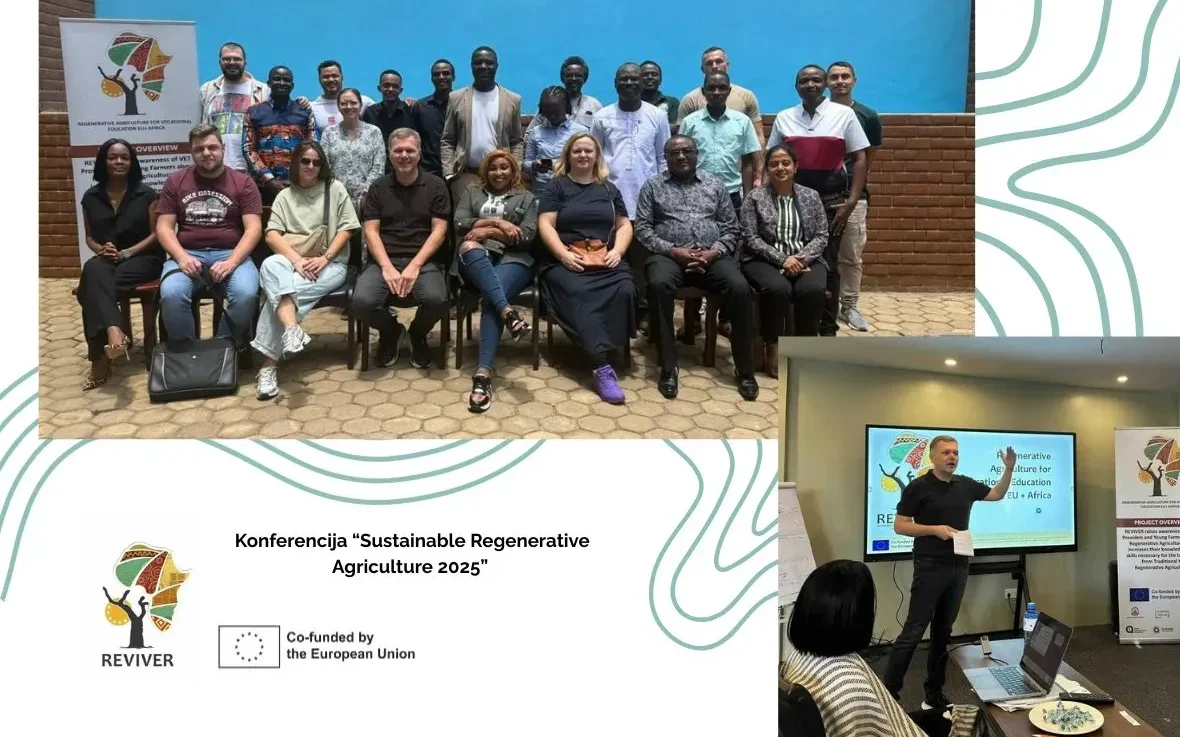
From 13 to 15 October 2025 we attended and took part in an international conference on sustainable regenerative agriculture in Arusha, Tanzania, organised by the Apex Agribusiness Academy and its partners. The conference brought specialists together around one message: using regenerative agriculture curricula and practice as a workable route to a green economy and environmental sustainability.
The team from Pannonia Consulting joined discussions on pilot training, pilot programmes, and what holds back or helps the uptake of regenerative agriculture in Africa. The schedule was full of keynote lectures, workshops and round tables. The main subjects were coping with climate change, keeping soil healthy, protecting the natural world, managing water, and looking after farmers’ livelihoods and businesses.
The three-day event was a significant step for the REVIVER project (Regenerative Agriculture for Vocational Education EU + Africa), an initiative set on changing how agriculture is taught in Europe and Africa. With more than 20 participants from six countries, the conference served well for exchanging ideas, matching tools to knowledge, and sharing new, smart solutions for farming that helps the land recover.
The aims were clear: to promote the exchange of knowledge, to present the learning plans and tools created in REVIVER, to discuss where regenerative agriculture stands today, and to help a wide range of groups work together on the best ways of spreading these methods across Africa.
The conference closed with action planning, which strengthened cooperation and set out a clear route for carrying what the project has learned into future policy. It confirms that regenerative agriculture is a sound answer for a greener future.

Funded by the European Union. Views and opinions expressed are however those of the author(s) only and do not necessarily reflect those of the European Union or the European Education and Culture Executive Agency (EACEA). Neither the European Union nor EACEA can be held responsible for them.