Guidelines for youth organisations: from spotting greenwashing to measurable change
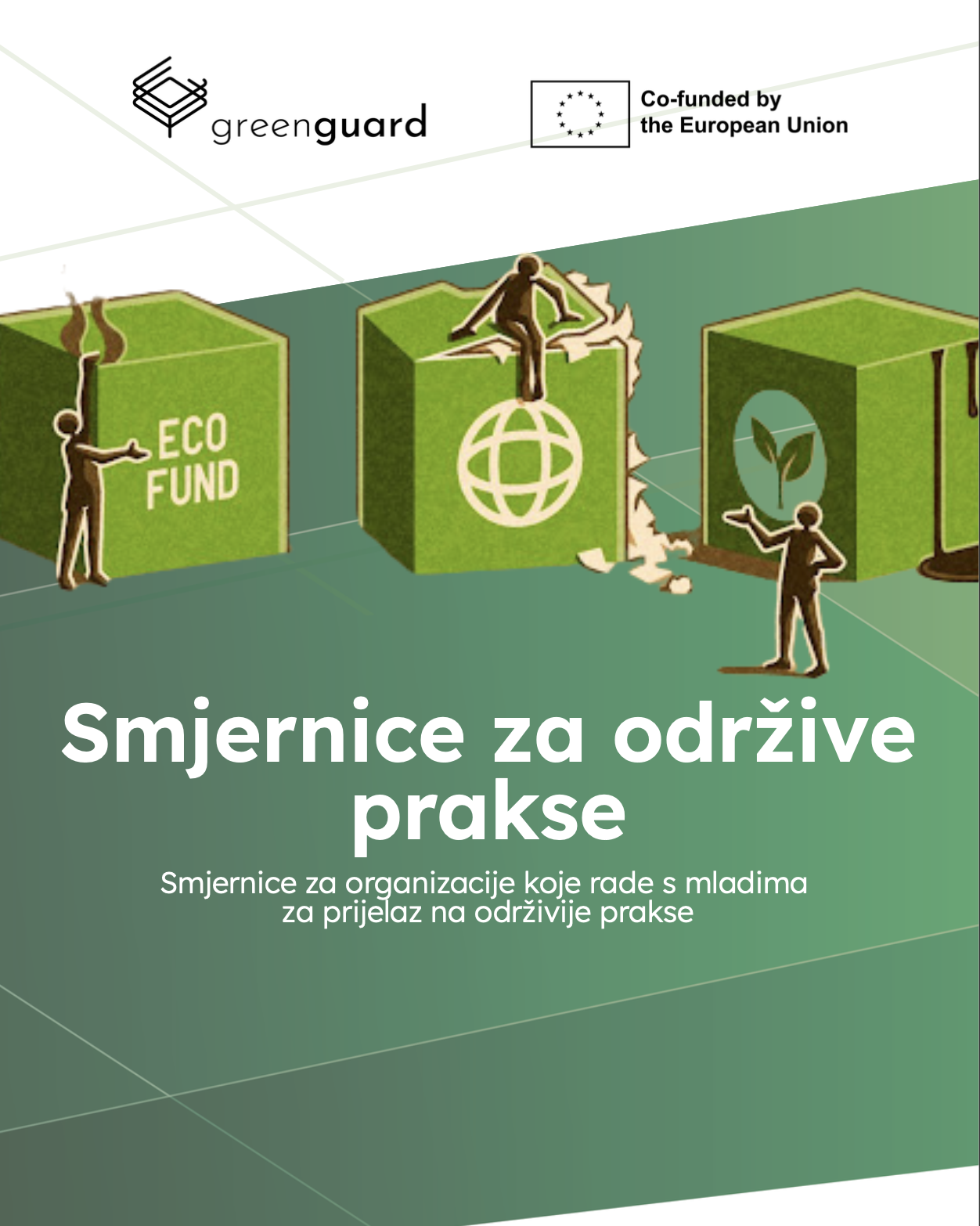
The document “Guidelines for organisations working with young people on the move to more sustainable practice” was produced within the project GreenGuard – Mobilising digital solutions for genuine environmental progress. Its focus is on empowering young people and youth workers through non-formal learning, practical tools (a mobile application and e-learning), and clear steps for avoiding greenwashing and encouraging authentic sustainability. The guidelines are part of the results of Work Package 2, coordinated by Istituto Universitario Carolina Albasio with contributions from partners in Portugal, Germany and Croatia.
Greenwashing is defined as the misleading practice of presenting products, services or a business as “greener” than they are, most often through vague claims, imagery and unverified promises. Communication of that kind erodes trust, undermines the integrity of environmental messages and draws attention away from real solutions.
To get a realistic picture, the project developed a Greenwashing Index for Croatia, Germany, Italy and Portugal, built on six criteria (clarity, third-party certification, consistency with actual practice, transparency, coherence, and a full life-cycle approach). The findings show vague or contradictory messages to be widespread, particularly in energy and consumer goods, with a strong negative effect on young people: rising eco-anxiety, falling trust, and confusion about “green” choices.
The GreenGuard guidelines turn countering greenwashing into a methodical, youth-centred process, with clear communication standards, participatory governance and tools that track progress. Youth organisations thereby get a framework for reducing their own footprint, improving their credibility and building trust in sustainable practice that genuinely has an effect.